

Scroll to read
QUANTUM
FIZZ
2022–2032
Q-11 Years:
Harvest now
A drop of sweat runs down Ramsys's face. His bots did their job: get in, copy the data, get out. Bingo.
But he can’t be sure they were not seen… And on these critical systems, one small theft can start a war. His boss puts a hand on his shoulder.
“Good work, take five.”
In the break room, a US recruitment-style poster: I want YOU… to harvest now and decrypt later.
Ramsys (the code name he chose years ago) looks at it absently. His mind is on his team’s goal, copying Europe's data by the terabyte. Nobody can read it yet, and it doesn’t matter. In three months, three years or thirty, this stolen past will become a weapon.
Next door, a cheer erupts: the Vamp-bytes team has just emptied the database of another ministry. Somewhere in Europe, a system administrator is sound asleep.
After all, "their data is encrypted with RSA-2048"...
Q-6 months to Q-2 days:
The chandelier
Ramsys has grey hair and a higher rank now. He supervises. Today the work is done by a submarine drone, holding on to a cable at the bottom of the sea: the opening move in tapping Europe’s internet arteries to harvest its digital blood.

They had been sponsoring influence groups lobbying against data centres in Europe for months, to push the Old Continent to store its data abroad, with hosts that ask fewer questions. And it had worked quite well.
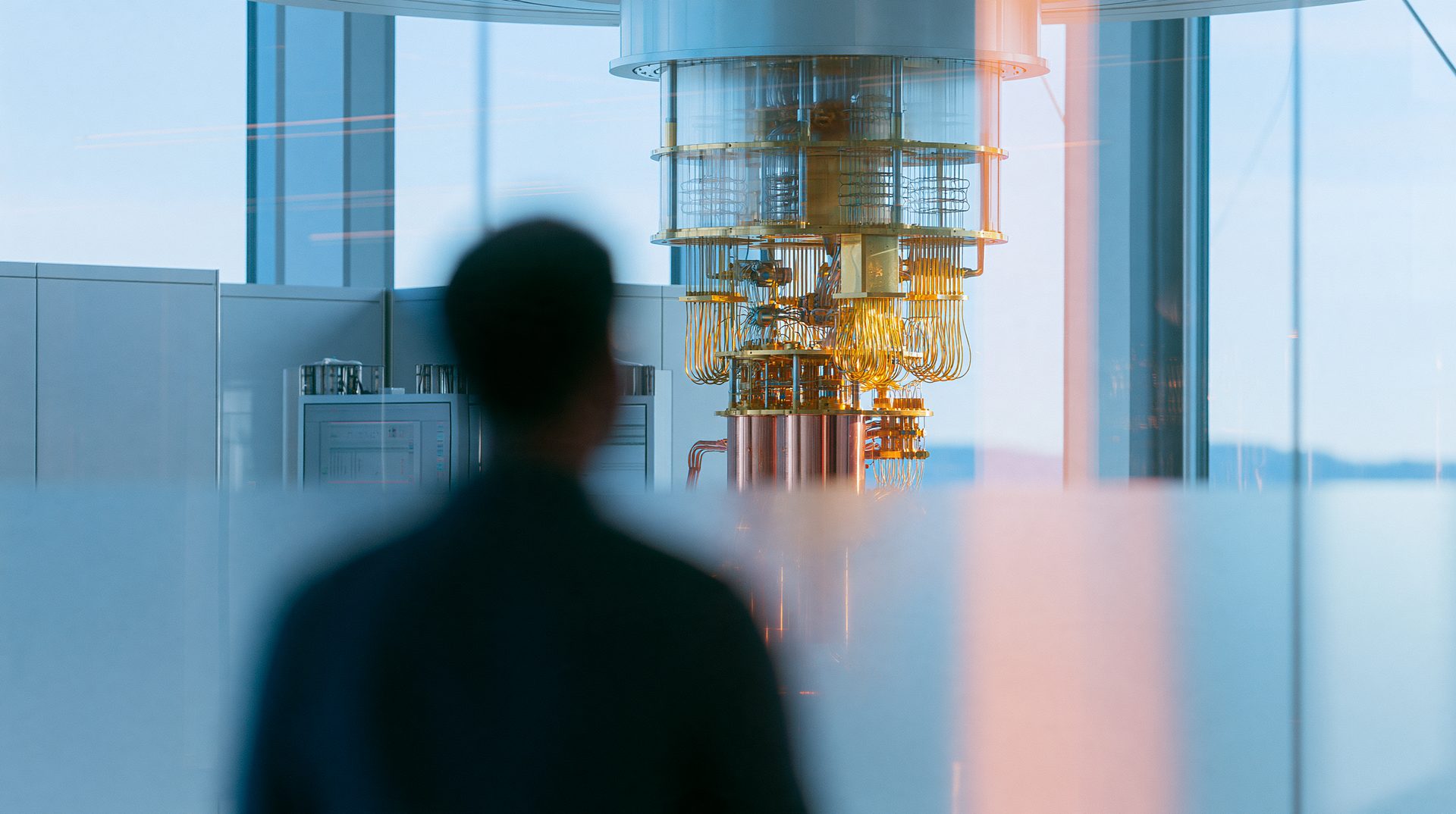
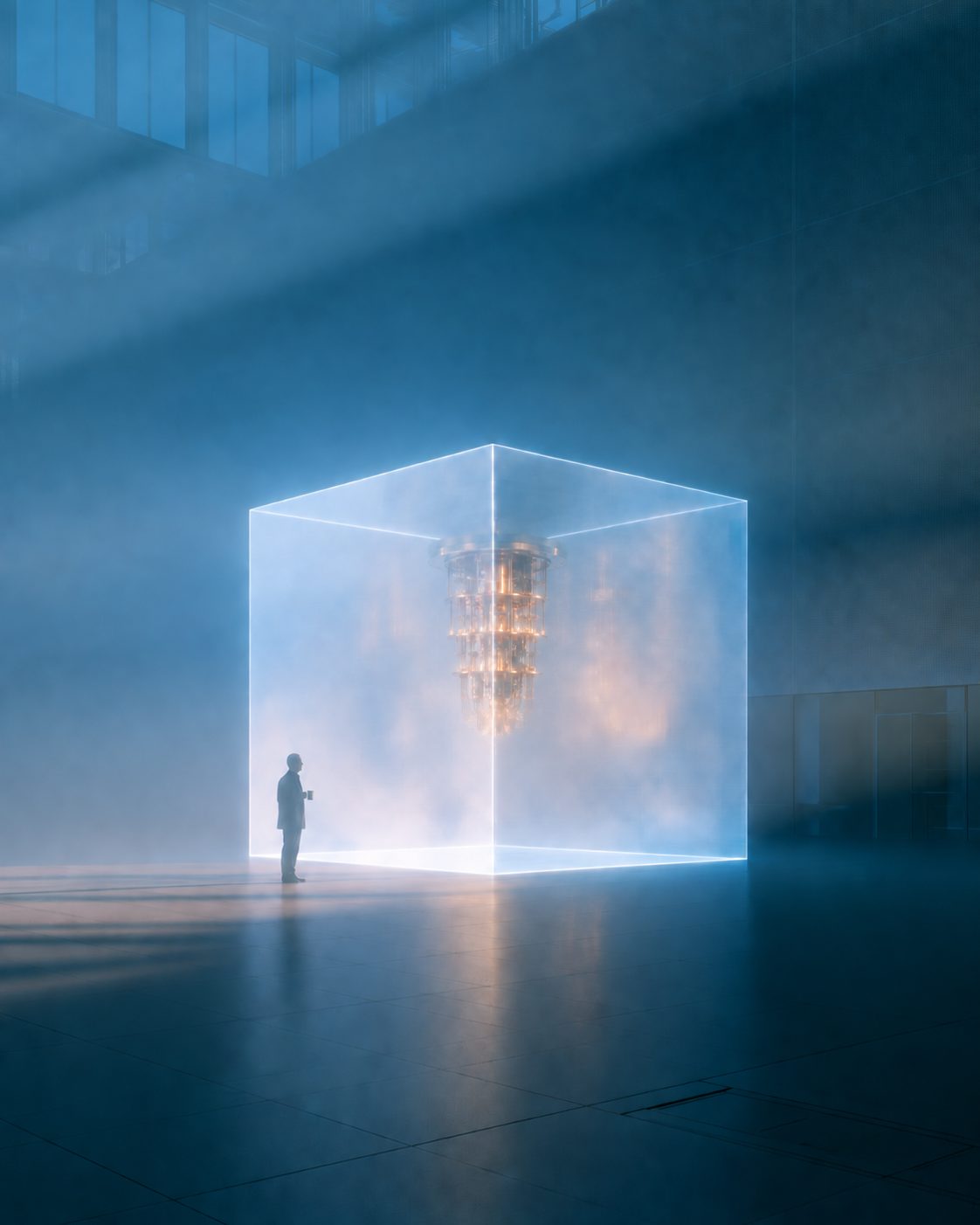
Two floors below, in a cube of thick frosted glass, hangs the machine Ramsys saw only once: polished copper and golden cooling pipes, like a baroque chandelier kept in a vacuum.
A quantum computer, turned on just a few days ago. It cracks open years of data, and an AI sorts and files it. The pile — around 954 petabytes — is almost ready to be published.
March 21st 2031: a warning reaches several European agencies. A source says that a hostile country, one that smiles in public and works against Europe in private, owns a working quantum computer.
Every agency ignores it: the experts agree that this cannot happen for another 3 to 6 years.
The same day, three senior officials, French, Italian and Polish, open an anonymous link from a group called Promethe-Us. On the screen: their full medical and bank history since 2012. Then a countdown: H-46.
Q-Day:
“For the people”
Markus had been writing the name "Q-Day" in slide decks for ten years. As Head of Digital Security for the tax administration in northern Germany, these four letters resonated with deep fear: the Quantum-Day. The moment a quantum computer becomes capable of cracking standard digital encryption, instantly threatening global financial and cyber security. Every year he asks for money to change the encryption: every year he is told the risk is years away.
On Sunday evening, his Discord group is lighting up. Promethe-Us has just gone live, and what the website is announcing cannot be ignored: twenty years of captured internet traffic, decoded and indexed for all twenty-seven countries.

"Promethe-Us
They will be releasing it, day by day. Like a Netflix series. Type a name in the Promethe-Us search engine, and who knows what you will find: diplomatic cables, text messages and medical files of ordinary people…
Markus resists the urge and does not type his own name. He types the name of a nearby city: fifteen years of financial records, clean and sorted. He checks: his servers were not broken into last night. The files were copied in 2014. Q-Day is underway.
Q+6 days to Q+1 month:
Scan fever
The first victims are not governments but neighbours. Experts call it "scan fever": whole evenings spent searching for your boss, your ex. Mayhem takes over offices, homes, and cities.
Two new businesses appear within hours. "Lookup operators" set up a daily scan for you on Promethe-Us, providing a heads up and a safe distance from compromising evidence. And a black market sells the impossible promise to "clean" your file.
Two hundred thousand people gather at the European Parliament after location data places members playing golf with lobbyists just before key votes. Those who said "honest people have nothing to hide" resign.
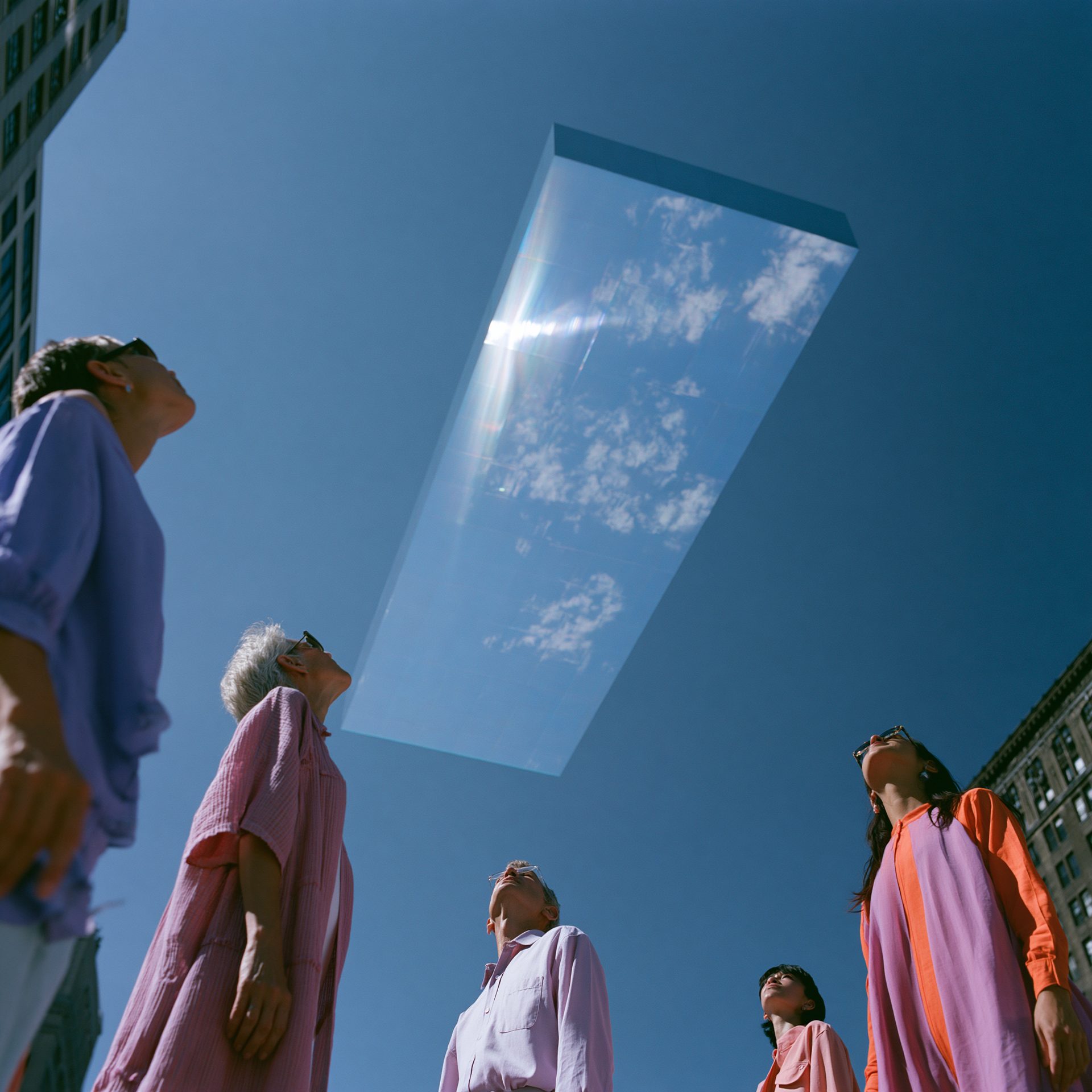
Blocking the site fails everywhere. It finds endless ways to reappear. The "people's Palantir" —as Promethe-Us zealots now call it— comes with free VPNs, copies passed by Bluetooth, and mirror sites that change addresses every day. Every ban looks like a confession: what is our government hiding?
Europe cannot block Promethe-Us. Promethe-Us is blocking Europe.
Q+2 weeks to Q+7 months:
The Brussels Project
Among the EU member-states and its partners, the one thing everybody can agree on: no "geek in a garage" can amass twenty years of archives. This is a state-sponsored initiative. The answer comes fast, spearheaded by a spontaneous coalition: it is called the Brussels Project.
A Manhattan Project that builds a shield instead of a bomb. As a seasoned cybersecurity veteran who actually knows a thing or two about Q-Day, Markus is one of the five hundred experts called in, alongside consultants, researchers, and engineers from across Europe.


The only problem: nobody has the blueprint for the whole shield. The pieces and the knowledge sit in twenty-seven locked drawers, Swedish algorithms, Dutch chips, Italian designs, Estonian academic research, each guarded by patents and national pride.
The idea actually comes from Markus himself. In his PhD days, he used to read paywalled papers on pirate sites. So while the whole continent searches Promethe-Us for names, he searches it for… research.
The attacker was too hungry to read what it had harvested. Buried in what the mass of what it publishes, day after day, are all those drawers, opened, decrypted and neatly indexed. The weapon aimed at Europe contains the tools to defeat it. So Europe harvests itself, copying the secrets its nations had hidden from each other for decades, a forced open source that no
treaty had ever managed.
Q+10 months to Q+1 year:
Quantum Shield for Good*
Ministries, hospitals and banks move to the new locks in months rather than years, and Markus spends the winter in server rooms, finally doing the work he had asked for every year.
But no lock repairs trust, so Parliament passes the Quantum Right to Forget: no leaked file can be used in court except for crimes and felonies, and archives older than ten years must be destroyed or made anonymous, so the next intruder finds only a desert of metadata.
Historians call the year "the datastrophe". Europe now shares its shield with the world on one condition, the Brussels Oath:
Quantum as protection, never as a weapon.
Only nineteen of the twenty-seven members have signed it so far, the others are still too intent on settling the score with the adversary.
The latter wanted to break the Old Continent by revealing its secrets. Instead, they forced it to share them and turned it into a technology giant. Promethe-Us still runs, but on empty, and people visit its archives like a museum.
In a break room in Brussels, a grey-haired man who once chose the code name Ramsys enjoys his coffee under a brand new poster: “I want YOU… to encrypt now and forget later.”. It was the first time the former hacker felt at peace since he defected.
He had fled the purges that followed Promethe-Us's failure as much as his own conscience, after watching the first fallout of Q-Day in horror.
Now he pours the expertise he built on the other side into the ‘Quantum Shield for Good*’, recasting it as technological soft power for Europe’s allies.
*Terms and conditions apply
THIS IS NOT THE END
This was a Sopra Steria cyber-fiction: a projection into a possible future, drawing on the perspectives of our experts to explore how emerging risks might evolve. The characters, companies and events are entirely fictional.
These are exactly the questions Sopra Steria works on every day, from securing AI systems and data integrity to threat intelligence, identity and access management, governance and compliance, and incident response. To go further, we have created an activity board to explore these scenarios hands-on. Try it with your team, or get in touch and let's work through it together. You'll find it below our expert’s comment.
Is your company ready?

Our expert’s comments
"Use this space to highlight great experiences that a client has had from your services."
- Ola Nordmann
"Use this space to highlight great experiences that a client has had from your services."
- Ola Nordmann
"Use this space to highlight great experiences that a client has had from your services."
- Ola Nordmann
Get in touch